Top 6 AI Tools to Restore Old Photos Without Editing Skills
People often let old photos sit in boxes or digital folders. The reason is straightforward: manual restoration takes hours, and not everyone has those hours or the patience for complex editing software.
Artificial intelligence changes this equation entirely. AI tools now handle tasks that previously required professional skills, often in seconds. The following six options represent the current landscape, but this isn’t just another list. We have focused on real differences such as speed, specialization, and platform so you can choose based on what actually matters for your specific photo.
Renew Photo
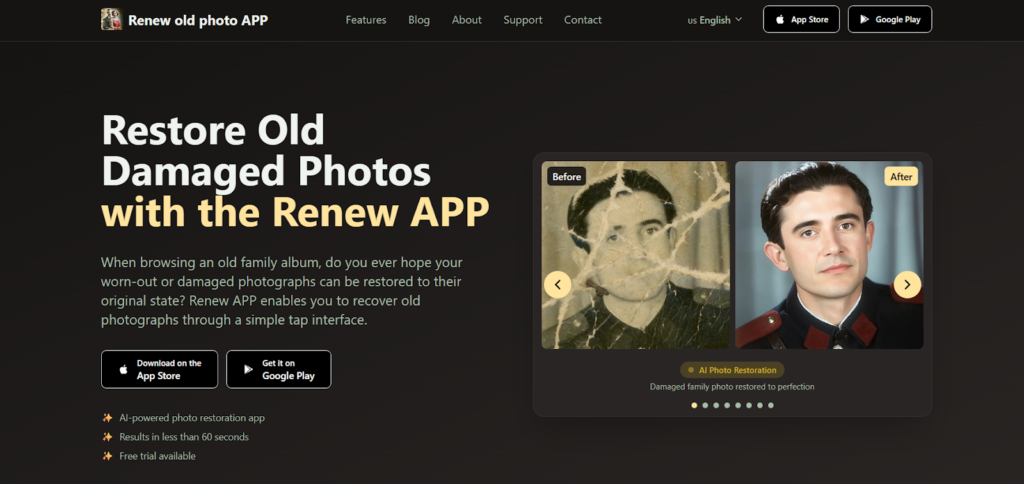
Renew Photo positions itself as a complete restoration solution. You upload a photo, and the system does everything without sliders or settings to tweak.
We place it first for its rare balance. Speed does not sacrifice quality, and simplicity does not mean limited results. According to our analysts, this is the tool that most users reach for when they want one platform to cover multiple restoration needs.
What Makes It Stand Out
Renew Photo handles the majority of restoration tasks without requiring any additional steps. You do not need to switch between different tools for scratches, color, or resolution.
The features that define its approach are:
- Full restoration triggered by a single click;
- Automatic detection and removal of physical damage and scratches;
- AI-powered colorization for black and white images;
- Output at high resolution without requiring manual upscaling;
- Processing times that rarely exceed a minute.
This combination makes Renew a genuinely universal option for most users.
When It Works Best
The tool suits anyone who needs a fast, high-quality result without any prior editing experience. It works well for mixed damage, especially for photos that have both color fading and physical wear.
RetroFix
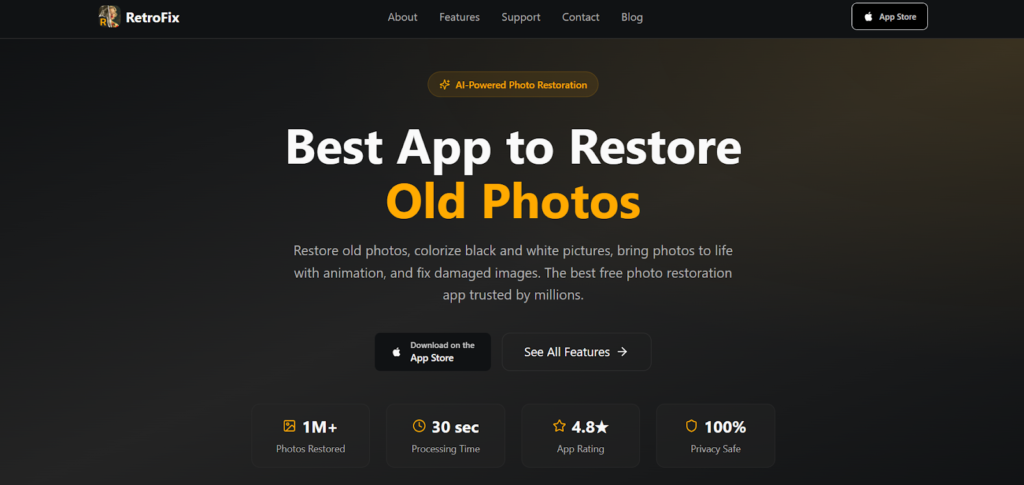
RetroFix offers a stripped-down approach to AI photo restoration. The interface is minimal, and the focus is squarely on speed and accessibility.
This is a strong free option, and it works particularly well on mobile devices. You can process a photo directly from your phone without downloading a separate app.
Key Strengths
The tool targets quick tasks where you want results without navigating complex menus. It does not try to be a full editing suite.
The core advantages include:
- Processing finishes within seconds for most images;
- A mobile-optimized workflow that requires minimal tapping;
- Interface design that avoids unnecessary features or settings;
- Free access to the main restoration functions;
- One-click export for saving completed images.
Its simplicity is the main selling point.
Best Use Cases
RetroFix works best for casual users who need to restore a few photos quickly, maybe on their phone while sorting through old family albums.
MyHeritage Photo Enhancer
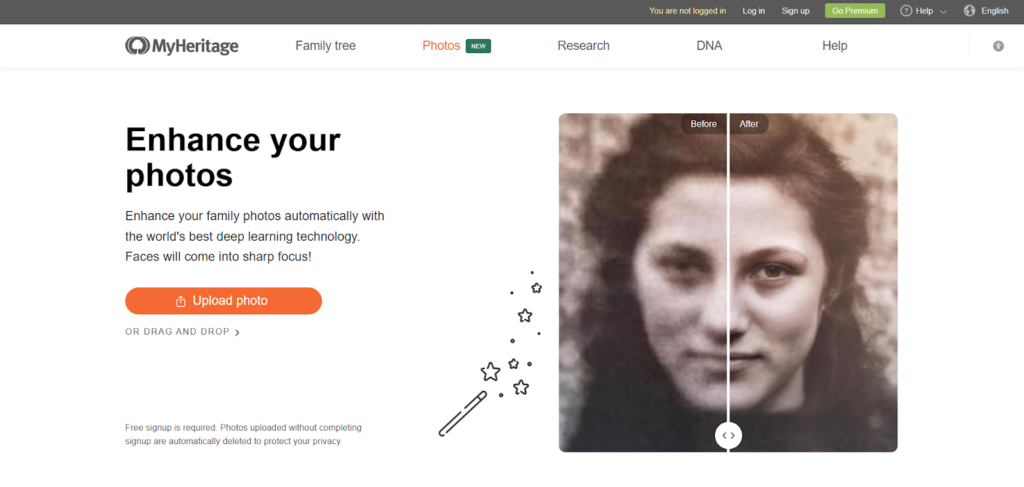
This tool comes from the genealogy platform MyHeritage. It focuses specifically on old family photographs, often portraits where faces are the central element.
The technology behind it specializes in facial details. According to our data, it outperforms generalist tools when the primary goal is sharpening or enhancing a person’s features in an old image.
Core Features
MyHeritage directs its AI specifically toward portrait improvement. It assumes the main subject is a face and optimizes accordingly.
The main functions are:
- AI that enhances facial details without creating an artificial look;
- Automatic sharpening applied primarily to facial features;
- Color improvement tools designed for faded portrait photos;
- A straightforward online interface that requires no account setup;
- Results delivered quickly, usually within a minute.
This specialization makes it a go-to for family history projects.
Fotor AI Photo Restorer
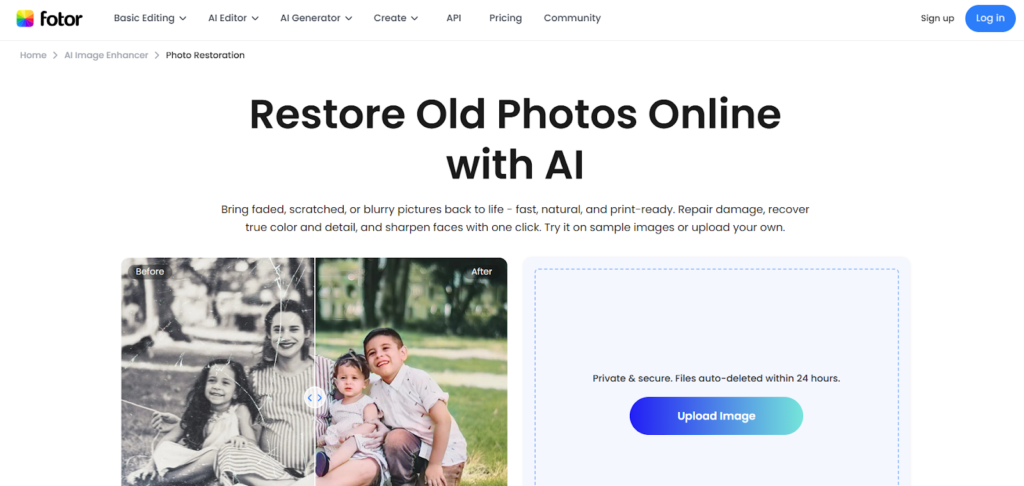
Fotor has long existed as a general photo editor. Its AI Photo Restorer feature adds restoration capabilities to an already broad toolset.
This option provides a middle ground between simplicity and control. You get AI-powered fixes, but you also have access to manual editing tools if you want to adjust the results afterward.
Main Capabilities
The tool suits basic restoration tasks where you might want to do a little more after the AI finishes. It is beginner-friendly but does not lock you into an automatic-only workflow.
The capabilities worth noting:
- AI-powered detection and removal of scratches and dust;
- Color correction tools that work alongside AI adjustments;
- Built-in editing features for manual touch-ups;
- Interface designed for users with little to no editing experience;
- A free plan that provides access to core restoration functions.
For users who want a safety net of manual controls, this works well.
Let’s Enhance
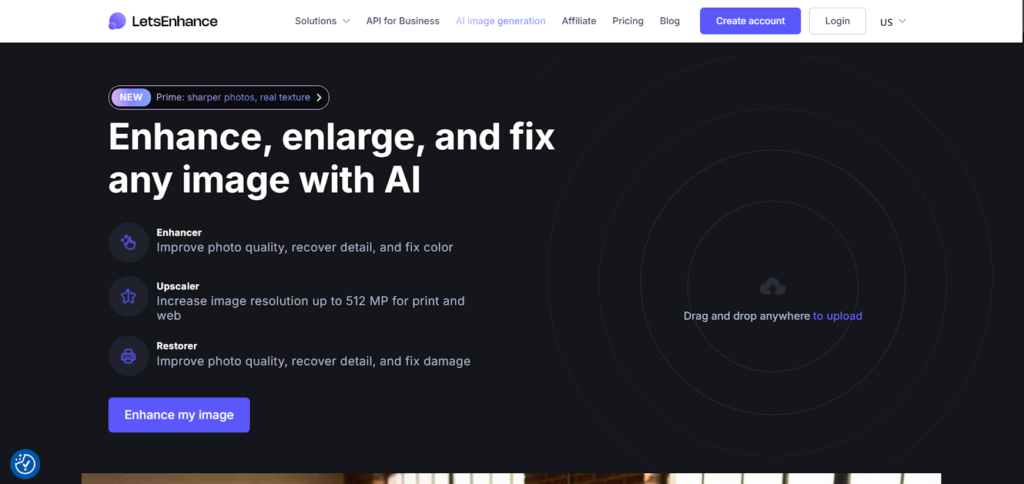
Let’s Enhance focuses primarily on upscaling and detail recovery. Its name reflects its core function: improving resolution and clarity.
This is a more technical tool. It suits situations where the original photo is low resolution, and the priority is increasing size without losing quality.
Key Advantages
The tool applies algorithms designed for professional output. It handles batch processing, which is useful for digitizing entire collections.
The standout features are:
- Upscaling to high resolutions while preserving detail;
- Algorithms that enhance fine details rather than simply enlarging pixels;
- Noise reduction that targets grain without smoothing textures;
- Batch processing for handling multiple images at once;
- Output quality aimed at printing or professional use.
It is a strong choice when resolution is the main problem.
Remini

Remini is a mobile-first AI application that gained popularity for its ability to sharpen blurry photos. It runs primarily on smartphones, though a web version exists.
The tool works well with images that are out of focus or taken with older cameras. It reconstructs details that appear missing.
Key Features
Remini focuses on speed and ease of use, especially on mobile devices. One tap initiates the processing.
The key features are:
- AI that enhances faces and facial features specifically;
- Technology designed to remove blur and sharpen soft images;
- HD upscaling that increases resolution during the process;
- A mobile experience that does not feel like a desktop tool squeezed onto a phone;
- Processing that requires a single tap to start.
Its popularity stems from delivering visible improvements on blurry photos with minimal effort.
How to Choose Between These Tools
The right choice depends entirely on the specific problem you are trying to solve. A photo with minor fading requires a different approach than a badly torn image with faces missing detail.
Several practical criteria help narrow down the options:
- The extent of damage: scratches and fading versus just low resolution;
- Whether you need high-quality output for printing or just for screen viewing;
- Your preference for free tools versus paid features;
- Where you will do the work: mobile phone or desktop computer;
- Speed versus quality: do you need an instant result or the best possible restoration.
No single tool does everything well. Matching the tool to the specific problem yields better results.
Final Thoughts
Renew Photo offers the most balanced package for most users, as it handles a wide range of issues well. RetroFix is the quickest and simplest, especially on mobile. The others each bring something specific: MyHeritage for portraits, Let’s Enhance for resolution, and Remini for blurry shots. Pick based on what your photo actually needs.