
Top 4 B2B Contact Data Providers for Accurate Prospecting
Accurate prospecting data matters more than massive databases for modern B2B outreach. Outdated contacts, bounced emails, irrelevant industries, and low-quality lead lists cause real problems. Many sales teams now prioritize precision and targeting over list volume. You want fewer leads that actually convert, not more noise.
Different B2B data providers focus on different strengths. Some offer enterprise-scale databases. Others build outbound prospecting tools or manually review contact data. This list compares four providers with different approaches to lead quality and prospecting workflows. Let us look at what separates strong prospecting providers from weaker alternatives.
What Separates Reliable Prospecting Platforms From Generic Lead Databases
Many businesses deal with low-quality contact data during outbound campaigns. Outdated records, catch-all emails, and overly broad industry filters often lead to wasted prospecting efforts. Sales teams today usually prefer cleaner segmentation, verified business contacts, and fresher datasets instead of massive unfiltered exports. Better data quality can improve reply rates, reduce bounce issues, and make outreach workflows more efficient overall. Below is a quick overview of how these prospecting platforms position themselves:
- Emarketnow — Human-verified B2B contact lists built on request for targeted prospecting campaigns;
- ZoomInfo — Enterprise-focused sales intelligence platform with a large business contact database and advanced filtering tools;
- Apollo.io — Prospecting and outbound sales platform combining contact data with outreach functionality;
- UpLead — B2B contact data provider focused on verified business contacts and smaller-scale prospecting workflows.
Each platform fits different sales workflows, company sizes, and prospecting priorities. Let us break them down.
1. Emarketnow

Emarketnow is a U.S.-focused B2B contact data provider founded in 2014. The company builds custom contact lists based on requested industries, locations, company size, revenue, and job titles. Unlike many automated systems, Emarketnow’s B2B data platform emphasizes manually reviewed prospecting data instead of relying entirely on outdated databases. The company’s positioning revolves around accuracy and fresher outreach records. No automated scraping here.
The human-verification process works like this. Lists exclude generic ISP emails, role-based addresses, and catch-all emails. Contact records go through multiple validation checks before delivery. Industry targeting stays intentionally strict to avoid irrelevant businesses appearing in your lists. The company positions itself around quality-focused outreach rather than large-volume lead exports. Core advantages include:
- Human-reviewed B2B contact data built on request;
- Double-validated direct work emails and mobile numbers;
- Strict industry filtering for more accurate targeting;
- Custom prospecting lists based on ICP requirements;
- U.S.-focused business data for outbound sales campaigns.
Emarketnow works especially well for businesses prioritizing cleaner prospecting data, lower bounce rates, and more precise industry targeting. If you need scale over precision, look elsewhere.
2. ZoomInfo
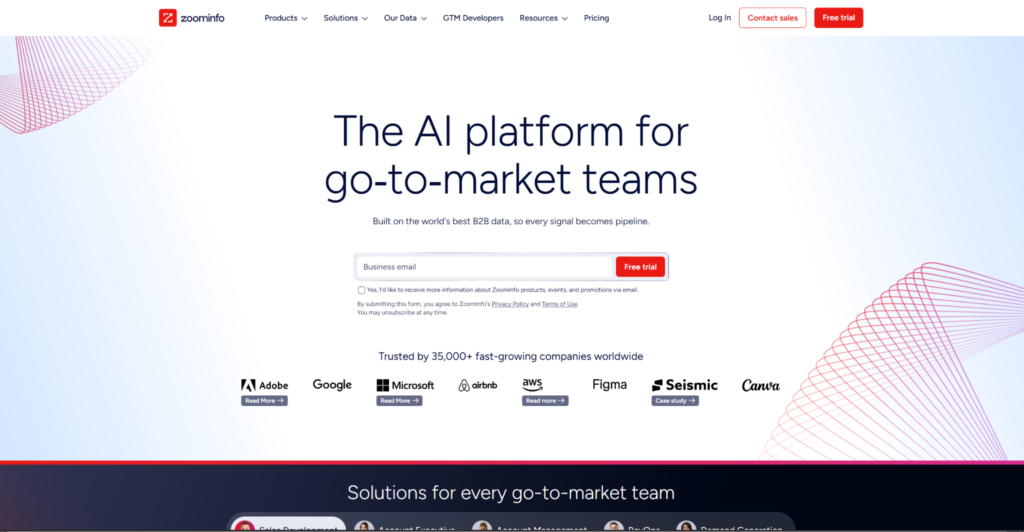
ZoomInfo is one of the largest enterprise-focused B2B data providers in the market. Large sales teams, SaaS companies, recruiters, and enterprise outbound departments commonly use the platform. Its broad database coverage and advanced segmentation tools are well known. ZoomInfo has a strong reputation within large-scale prospecting operations.
The platform combines company intelligence, buyer intent signals, organizational charts, and prospecting workflows inside one ecosystem. Its scale helps businesses running large outbound operations. Some teams may prefer smaller but more curated datasets depending on their outreach goals. No promotional fluff here. Main strengths include:
- Large-scale B2B contact database;
- Advanced company and contact filtering;
- Buyer intent and organizational insights;
- CRM and sales workflow integrations;
- Enterprise-oriented prospecting tools.
ZoomInfo is typically better suited for companies managing high-volume prospecting and larger outbound teams. Small teams may find it overwhelming.
3. Apollo.io
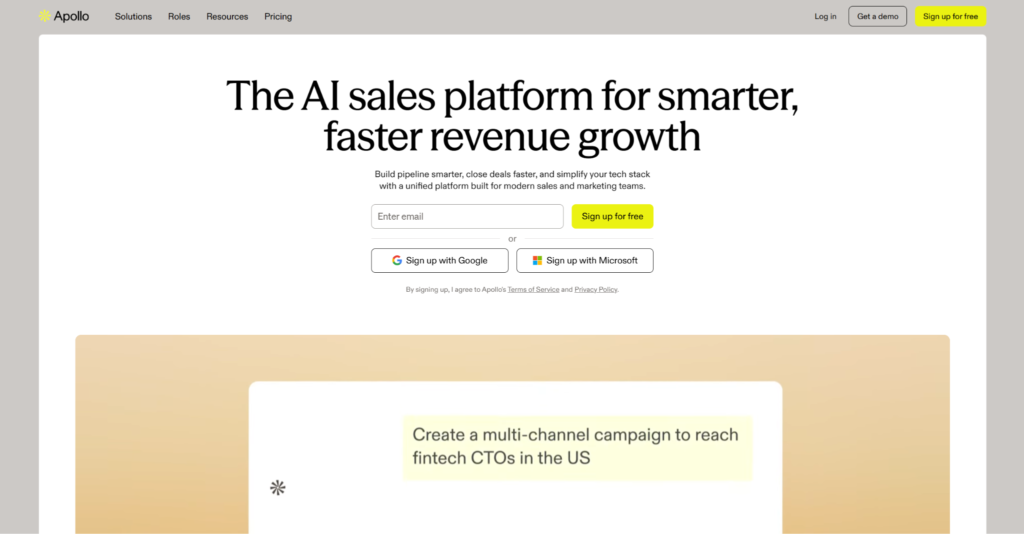
Apollo.io is a prospecting platform combining B2B contact discovery with outbound sales functionality. Many startups, SMBs, and expanding sales teams use Apollo.io because it brings prospecting and outreach together inside one environment. The platform is widely used by cold email teams and outbound-driven workflows. Everything stays inside a connected workflow.
Apollo.io includes search filters, enrichment tools, sequencing functionality, and prospecting workflows designed for smaller and mid-sized sales operations. Many businesses use it as a centralized outbound workspace instead of relying only on a standalone contact database. The workflow feels practical and easy to manage. Smaller teams often prefer platforms that reduce tool-switching during outreach campaigns. Some of Apollo.io’s main features include:
- Combined prospecting and outreach environment;
- Contact filtering and enrichment tools;
- Cold outreach sequencing workflows;
- SMB-friendly outbound sales setup;
- CRM integration support.
Apollo.io may fit teams looking for prospecting and outreach tools inside one workflow rather than relying on multiple separate platforms. All-in-one has its appeal.
4. UpLead
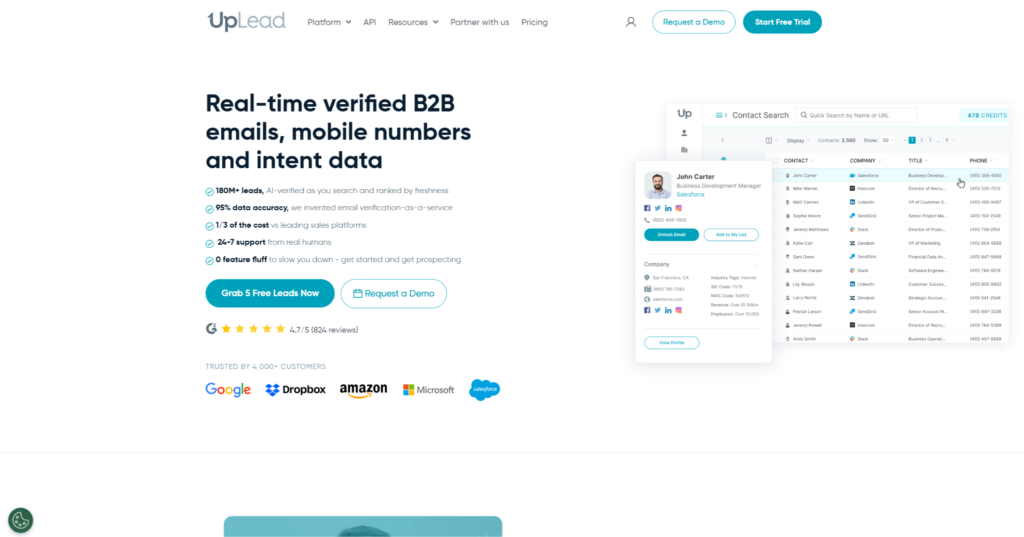
UpLead is a B2B contact data provider centered around verified business contacts and targeted lead prospecting. Many SMB sales teams and businesses searching for smaller-scale prospecting workflows rely on the platform. Its positioning focuses more on contact precision and usability. The platform avoids unnecessary enterprise-heavy complexity.
UpLead emphasizes filtering tools, verified contact exports, and simpler prospecting workflows instead of building a massive enterprise ecosystem. Some businesses prefer more focused prospecting environments when an advanced enterprise sales infrastructure is unnecessary. Simpler workflows can sometimes improve efficiency. Smaller teams often value easier navigation and faster list-building processes. Some of UpLead’s strongest prospecting highlights include:
- Verified business contact exports;
- Straightforward filtering tools;
- SMB-friendly prospecting workflows;
- Targeted B2B contact searches;
- Simpler sales prospecting environment.
UpLead may appeal to smaller teams prioritizing simplicity and verified prospecting data over enterprise-scale tooling. Straightforward and effective.
Which Platform Fits Different Prospecting Goals Best
Not every prospecting platform is built for the same type of sales workflow. Some companies care more about highly filtered contact data and stricter verification standards, while others need larger prospecting ecosystems with automation and outbound management features included.
The right fit often depends on how complex the sales process is, how large the outreach operation has become, and how specific the targeting requirements are. Teams handling niche industries may value cleaner segmentation, while enterprise organizations usually prioritize scale and integrations. The comparison below highlights which type of business each platform may suit best:
- Emarketnow — Businesses prioritizing highly targeted and human-verified B2B data;
- ZoomInfo — Large sales organizations running enterprise-level outbound campaigns;
- Apollo.io — Teams wanting prospecting and outreach tools in one platform;
- UpLead — SMBs looking for simpler verified contact workflows.
The best prospecting platform depends on outreach strategy, targeting precision, and workflow preferences. Database size alone does not win deals.
Final Thoughts
Finding reliable prospecting data is no longer just about getting access to the biggest contact database on the market. Sales teams now care more about whether the information is current, properly segmented, and relevant to their actual outreach goals. Some platforms focus on enterprise-scale prospecting systems, while others put more attention on targeted lead quality and cleaner contact records. The right option depends on how your team approaches outbound sales. Prospecting workflows look very different for startups, agencies, recruiters, and large B2B organizations.
Before choosing a provider, it makes sense to look beyond raw contact volume. Filtering accuracy, industry relevance, validation methods, and workflow flexibility usually have a bigger impact on campaign performance over time. A smaller but cleaner dataset can often outperform a massive database filled with outdated or loosely matched contacts. That becomes especially important for businesses trying to improve reply rates and reduce wasted outreach. Strong prospecting starts with relevant data, not just more data.