
Top 5 Language Learning Apps for Building Strong Basics
Strong basics are not just beginner words and grammar charts. You can finish early lessons and still struggle to build a sentence, remember useful phrases, or say something out loud. The real base should include vocabulary, grammar, pronunciation, recall, and the confidence to use simple language. Many learners fail because the foundation feels either too random or too passive. That is the problem this list tries to solve.
This list looks at apps that build basics in different ways. Guided study. Bite-sized lessons. Active recall. Grammar diagnosis. Spaced repetition. Promova leads because it connects guided courses, vocabulary and grammar tools, AI speaking practice, AI Tutor support, teacher-made content, and accessibility features. Ling App helps with less common languages. Qlango focuses on active recall. Kwiziq finds grammar gaps. Brainscape works on memory. Here is how they compare.
The Top 5 Apps We Chose for Building a Stronger Base
This list is not only about beginner-friendly apps. The focus is whether each app helps you create a base you can actually build on. Some apps give a guided learning path. Others focus on rare languages, grammar gaps, active recall, or memory work. That makes this list more useful than a simple ranking of popular apps. Here is why each one made the cut:
- Promova: Guided basics, AI speaking practice, tutor-style support, accessible study tools;
- Ling App: Short lessons, native-speaker audio, works for less common languages;
- Qlango: Active recall, games, exercises, answers in the target language;
- Kwiziq: Finds grammar gaps, fixes weak points, targeted quizzes;
- Brainscape: Spaced repetition, flashcards, recall, habit-building.
Each app approaches the basics from a different side. Promova comes first because it connects early learning with active use.
1. Promova
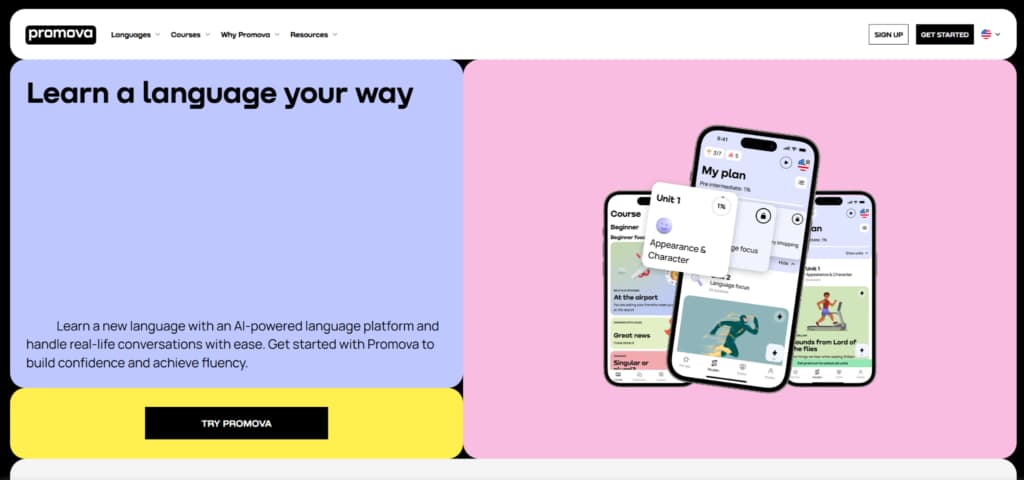
Promova works as a language learning app for people who want clear basics, guided lessons, AI speaking practice, and support tools in one place.
The app does not leave beginners stuck in passive drills. Guided courses, vocabulary and grammar tools, AI speaking practice, AI Tutor support, and teacher-made content all work together. You study the basics and then use them through speaking practice instead of only tapping answers. Dyslexia Mode 2.0, White Noise Mode for ADHD learners, and ASL support different learning needs.
Ideal starting point for: people who want structure without losing active practice. A clearer route through vocabulary, grammar, and first speaking tasks. Especially when you want the basics to turn into sentences you can actually say.
A good foundation needs more than word exposure. Order, review, speaking chances, and support when something feels unclear. Promova connects lessons, AI support, and active practice inside one learning flow. Here is how that works:
- Guided courses: Help learners move through the basics in a clearer order;
- Vocabulary and grammar tools: Support the early building blocks without making them feel detached;
- AI Tutor: Gives learners a place to ask questions and practise difficult points;
- AI speaking practice: Helps users turn simple language into spoken answers;
- Accessibility tools: Dyslexia Mode 2.0, White Noise Mode, and ASL support different study needs.
Promova takes first place because it connects structure, basic language work, AI support, speaking practice, and accessibility. Works for people who want a base they can actually use, not just finish.
2. Ling App
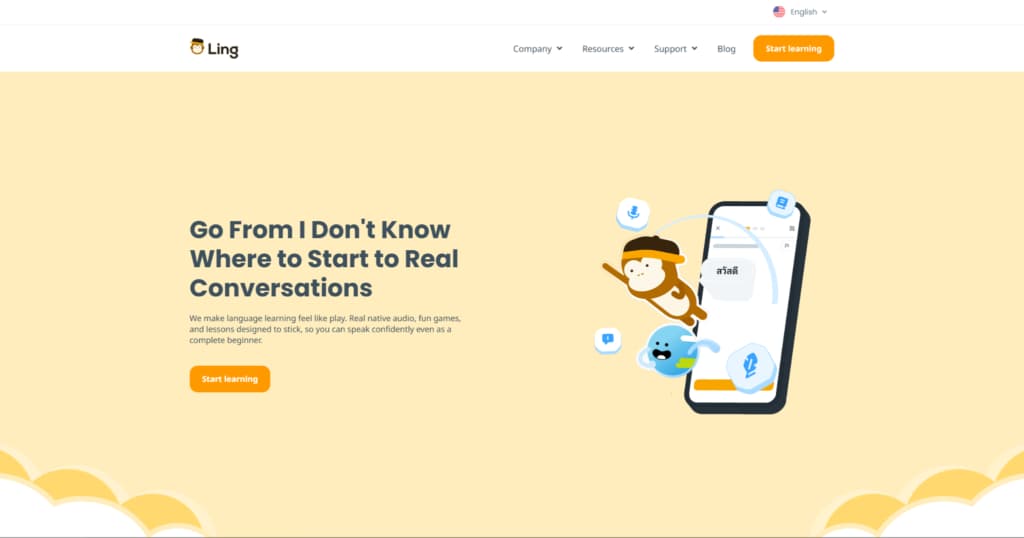
Ling App works for languages that bigger apps ignore. Beginner-friendly. Less common or harder languages. Bite-sized lessons, native-speaker audio, cultural insights. The value is not only in teaching basic phrases. It gives you a more approachable entry point. Helps when you want to start a language that mainstream apps treat badly. Ling App is good for early exposure. Promova gives a broader path with AI speaking practice, guided learning, and accessibility tools.
Works especially well for: a softer entry into an unfamiliar language. Get used to sounds, phrases, and basic patterns without heavy lessons. Useful when the first goal is comfort and consistency.
Starting a less familiar language feels harder. Examples, audio, and beginner materials may be limited. A lighter app helps build confidence before moving into deeper study. Ling App gives early support through short practice and native-speaker input. Here is what you get:
- Bite-sized lessons: Make early study easier to start and repeat;
- Native-speaker audio: Helps learners hear basic words and phrases from real speakers;
- Cultural insights: Adds context that plain phrase lists often miss;
- Wide language choice: Supports learners studying languages outside the usual app lineup.
Ling App is good for early exposure, especially with languages that feel harder to approach. Works as a starting tool. Not always a full long-term study system.
3. Qlango
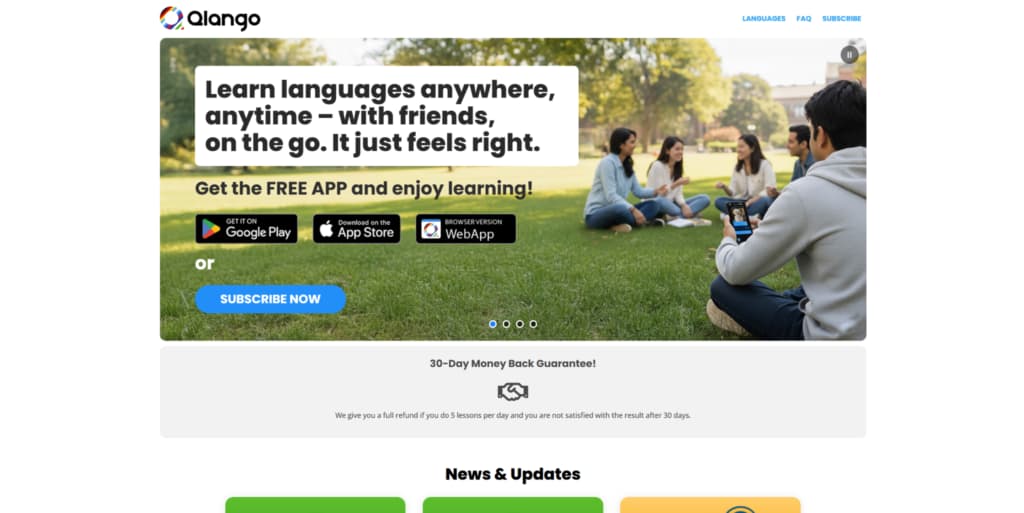
Qlango is built around active recall, not passive recognition. Games, exercises, and answers in the target language. Native-language support makes the study understandable without removing the challenge. The app fits people who want to recall language, not just look at it. More exercise-driven than Promova. Promova stays broader with guided lessons, AI speaking practice, tutor-style help, and accessibility support.
A smart match for: people who need to remember basics by producing answers. Works well for those who dislike passive review. Short tasks that still make you think.
Basics get stronger when you retrieve words and forms from memory. Recognition is easier, but it fails when you need to answer. Qlango pushes active recall through compact tasks. Here is the breakdown:
- Active recall: Makes learners produce answers instead of only recognizing them;
- Practice games: Keeps basic review more interactive and less dry;
- Target-language answers: Helps users work with the language they are learning;
- Native-language support: Gives explanations and prompts that make early study easier to follow.
Qlango is useful when you want the basics to stick through recall and repetition. A good option when passive review is not enough.
4. Kwiziq
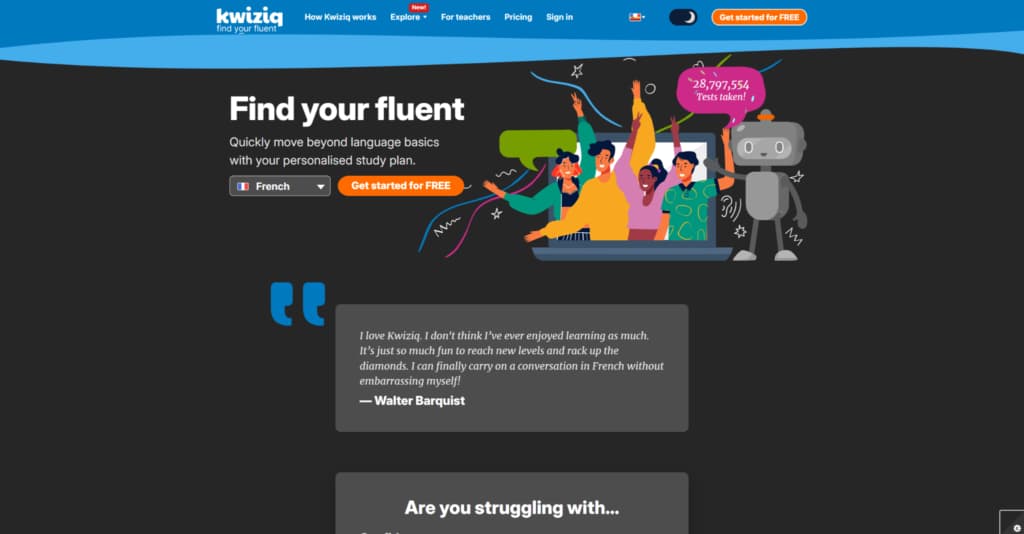
Kwiziq finds grammar gaps and fixes weak spots. Grammar clarity. Targeted practice. Level testing, gap detection, personalised study paths, and an AI coach. Useful when you keep making the same mistakes but do not know why. Kwiziq identifies weak areas and gives focused grammar work. Narrower than Promova, grammar-led. Promova connects basics with speaking practice, guided courses, and broader study support.
Best suited to: people who want to understand what is missing in their grammar base. Helps when general beginner lessons feel too vague. Targeted correction over broad app practice.
Grammar problems hide inside simple sentences. You may know many words, but still struggle with tense, word order, agreement, or sentence structure. Kwiziq turns weak spots into a clearer study path. Here is what it offers:
- Level testing: Helps learners see where their grammar actually stands;
- Gap detection: Points out weak areas that need focused practice;
- Personalised path: Turns grammar problems into a more direct study route;
- Targeted quizzes: Helps users practise the exact points they keep missing.
Kwiziq works when grammar is the main barrier to progress. A focused tool for repairing the base instead of guessing what went wrong.
5. Brainscape
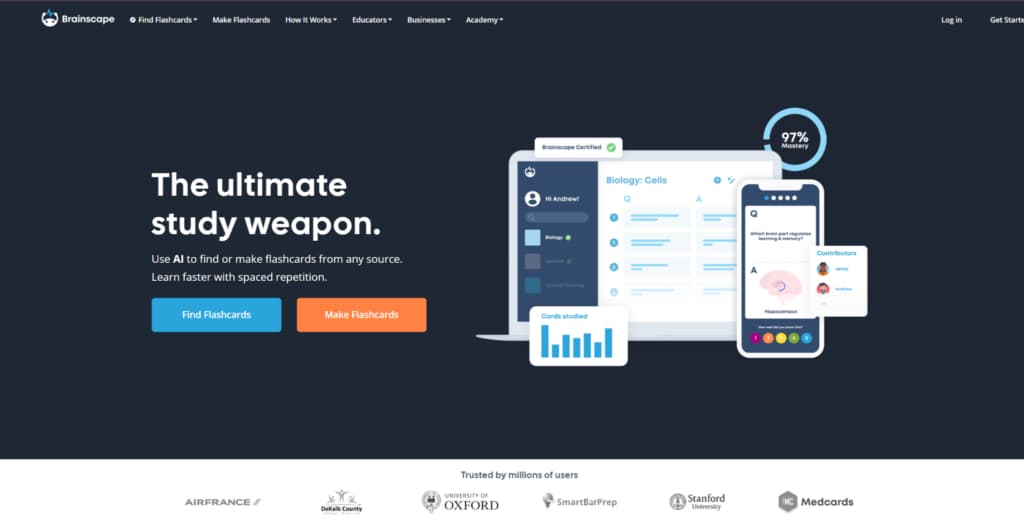
Brainscape locks in words, phrases, and rules through spaced repetition. A study tool for active recall and spaced repetition. Not a full language course like Promova. Flashcards, AI-assisted card creation, progress stats, habit-building features. Helps strengthen basics by reviewing words, phrases, rules, and examples at the right time. Brainscape is a memory support tool. Not a speaking or guided learning platform.
Most useful for: people who forget new words and rules quickly. Supports those who need repetition to make the basics stay. Works best beside another learning platform, not replacing one.
A weak foundation is often a memory problem as much as a lesson problem. You study a word once, recognize it the next day, and forget it a week later. Brainscape makes review timed and intentional. Here is the breakdown:
- Spaced repetition: Brings material back before it disappears from memory;
- Flashcard review: Helps learners repeat words, phrases, grammar points, and examples;
- Progress tracking: Shows what users know well and what needs more review;
- Habit support: Makes it easier to keep short review sessions in the routine.
Brainscape is a practical support tool for making basics stay in memory. Works best with a platform that also teaches, explains, and gives speaking practice
Final Thoughts
Building strong basics is not about rushing through beginner lessons. You need words, grammar, recall, pronunciation, and chances to use simple language before moving forward. Promova takes first place because it connects guided study, vocabulary and grammar tools, AI speaking practice, AI Tutor support, teacher-made content, and accessibility features.
Ling App helps with early entry into less common languages. Qlango supports active recall. Kwiziq focuses on grammar gaps. Brainscape helps with repetition and memory. Each app solves a different foundational problem. The right app makes the basics easier to remember, understand, and use.